
The World in Worldcon: A Chengdu Report
Science Fiction World, the magazine that has published and translated four of my stories into Chinese, has invited me to WorldCon in Chengdu, China. They paid for my flight, my accommodation, my expenses. I am ecstatic to be here, to be their guest.
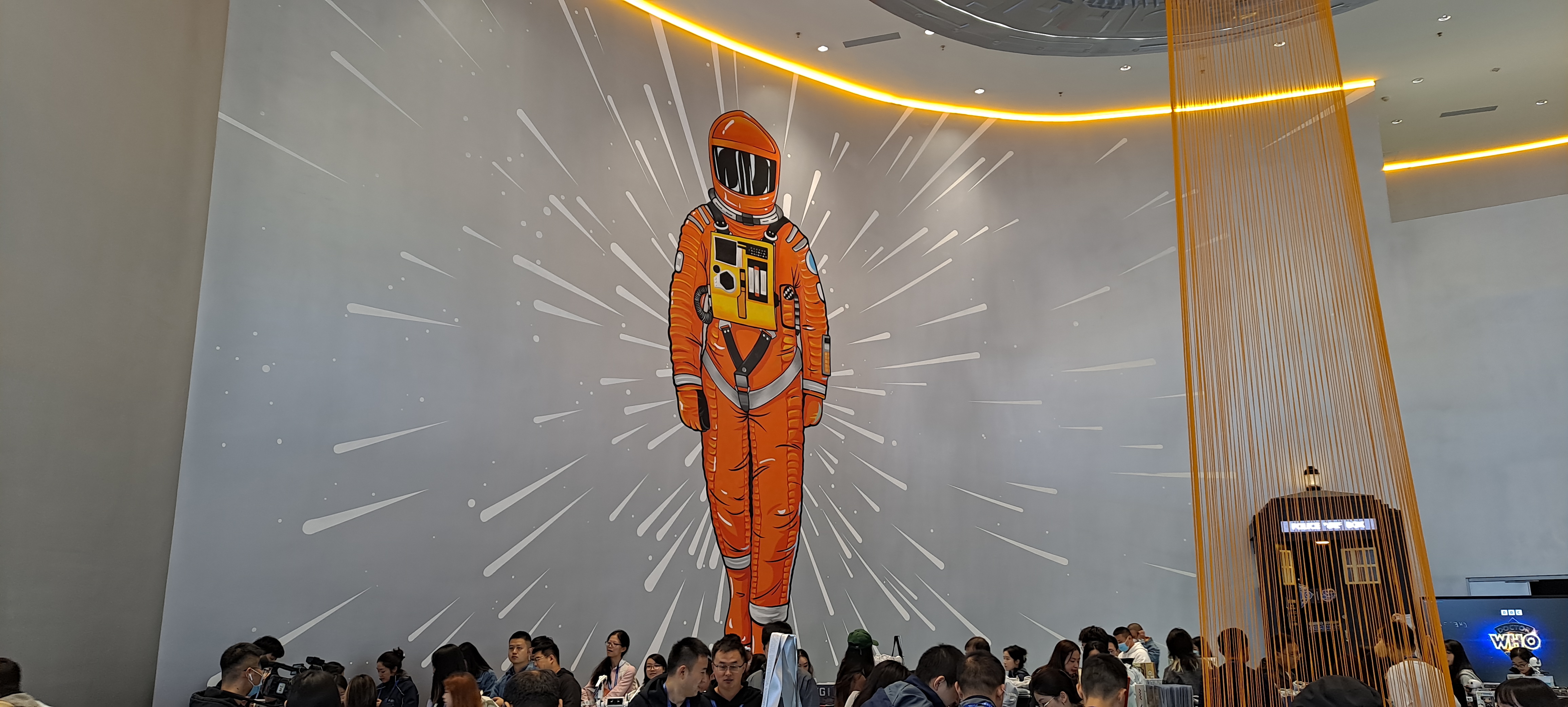
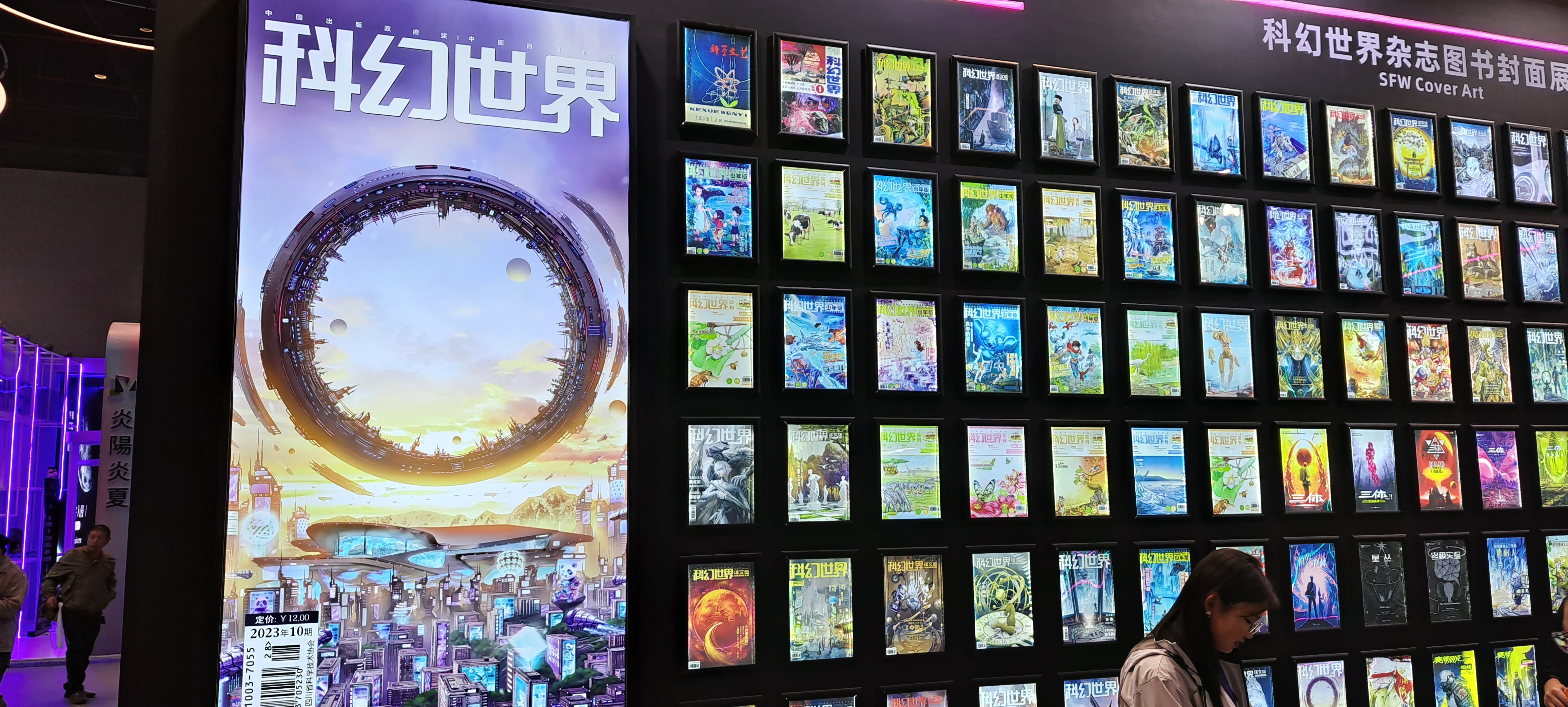
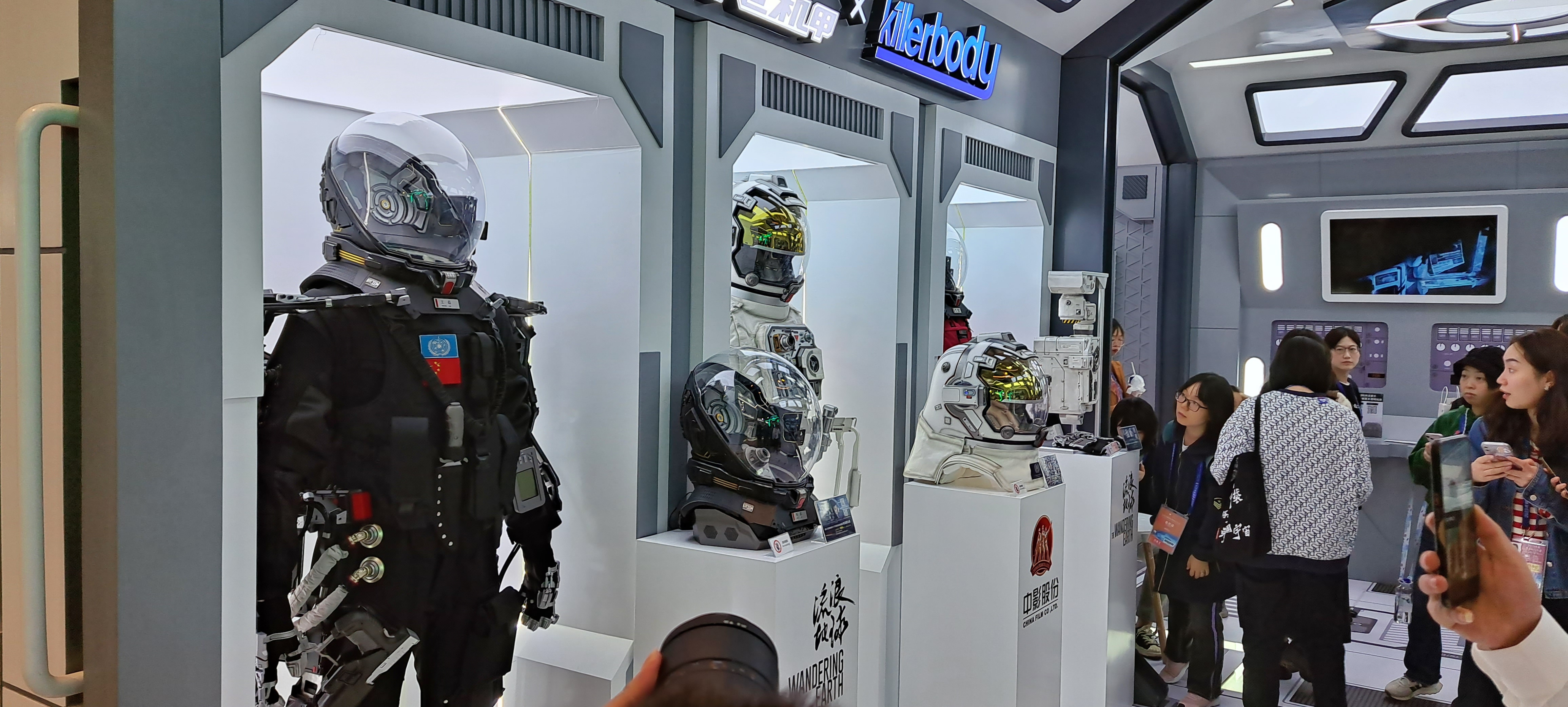
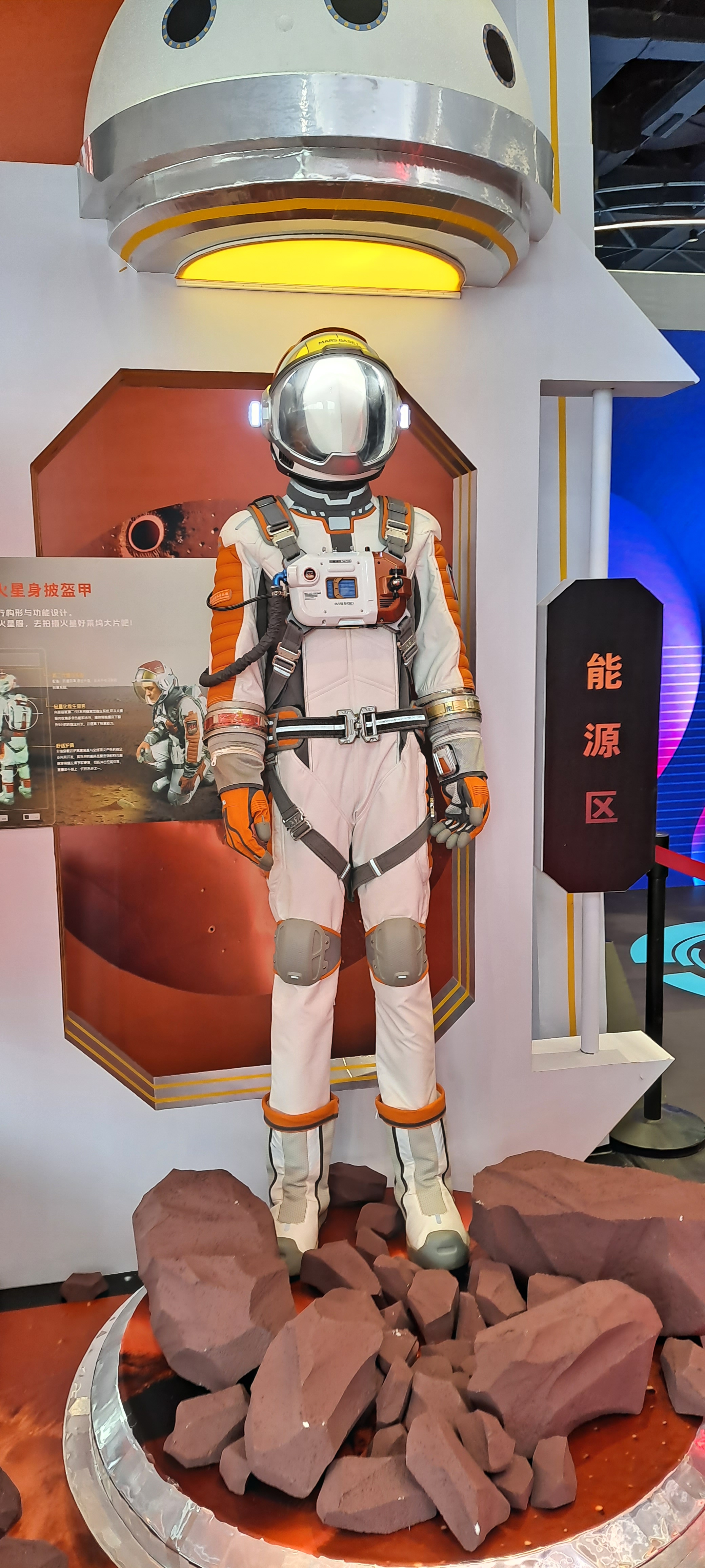
I step through the massive glass doors of a deluxe museum. It is massive. Colossal. With its gleaming silver walls and subtle blue lights and minimalist chrome design, it feels like I’m in the belly of a hi-tech spaceship. Which is exactly the intention. I’m in the Science Fiction Museum of Chengdu, a building assembled and designed to host the World Science-Fiction convention in Chengdu, China. Its very existence pays tribute to the works and trappings of science-fiction.
I am an invited guest of Science Fiction World, the magazine that has published and translated four of my stories into Chinese. They paid for my flight, my accommodation, my expenses. I am ecstatic to be here, to be their guest.
I’m led through a whirlwind of events, ceremonies, meetings, interviews and conversations. I’m thrust in front of cameras, wired up with microphones, offered seats and stools. I greet friends, both new and familiar to me. My editors and handlers keep close correspondence with me, telling me where I need to be, and at what time, and how I should be dressed. I’ve done WorldCons before. I know this gig. But something here feels different. There’s a buzz, a feverishness, in the air.
I know one reason why this is different. This Worldcon is diverse. Internationally diverse. I am signing books and t-shirts next to Korean writers, sharing beers with Japanese authors and mangakas, talking to Chinese artists, Colombian editors, Iranian booksellers, Egyptian producers. At my lunch table at the Sheraton, I’m eating with Mexican con organisers, Singaporean editors, fans from Saudi Arabia and New Zealand, Marvel studio animators from America, and literary legends from Scotland and Nigeria. I am rubbing shoulders with continents and dining with entire ecosystems.
And it’s nice. Never before have I felt so welcome. Never before have I truly felt at home, as a member of the science-fiction community. Diversity here isn’t spoken off. It’s acted upon. Where other conventions may attempt to gesture at diversity, as an abstract, here it is exacted. It’s presented, on an international scale. And it’s wonderful. We don’t all speak the same language. Because we share something else, something grander: a love of science-fiction and fandom.
*
But that’s not all.
Here, I am not simply just another writer who is attending the convention. I am a guest. I am driven from hotel to hotel, from site to site. I am recognized. Convention staff are waiting on me, to guide me to my designated seat, or usher me into a certain room. Things are expected off me. I am told where I need to be, and when, and for how long. This isn’t daunting. This confirms for me what I now know: I am a writer. I know my worth. I know my talent. And I know I am welcome here.
Am I a little egoistical for thinking all this? Perhaps. But as someone who has been crippled by self-doubt, plagued by insecurities, and troubled by my own lack of relevance, if someone tells me that I am worth their invitation to their city, and that I am a good enough writer to be given a spot at their table, who the hell am I to tell them that they’re wrong?
*
But that’s not all.
This WorldCon isn’t constrained only to books and literature. No. The entire plethora of fandom and science-fiction is on display here. Video-games. Films. TV series. Comics. Manga. Anime. Enthusiasts of robots and holographics and spaceships are present. This WorldCon has branched out, both in terms of funding and genre, extending its wings to encompass as many genres and subcultures of fandom as possible. All are welcome here, and all have a significant contribution to make to the world of science-fiction.

*
But that’s not all.
Before too long, I notice the types of attendees here at WorldCon. School-children, on excursion, swarm the hallways and atriums. College-aged teenagers and young adults jostle excitedly when they meet new authors. Film-makers in their late twenties and early thirties buzz around, desperate to share their passions with their peers.
And I realis how young everyone here is. How many children and teenagers are present, hungry for books, hungry for sci-fi. This doesn’t happen. In WorldCons I’ve attended, the populace seems to gravitate towards the older fans. Largely American, and almost exclusively English-speaking, these fans have been attending WorldCons for decades. They’ve helped to build Worldcon to what it is, and they’ll always have their place here. But sometimes, when they make up the majority of attendees, the genre in fandom can feel sterile and dry and classical. It’s a blast of fresh air to see so many young, fresh faces at this convention. And it is heart-warming to welcome so many of these young Chinese fans into the family of fandom, to tell them that they have their place here.




*
But that’s not all.
See, SF is revered in China. It’s not like in the West or the Anglosphere, where SF is seen as something either to make money at Comic Cons and through Marvel films, or a hobby for children. In China, it is something to be held on a podium. It’s seen as a vehicle for grand pursuits and as a discourse for various subjects. Engineering, science, architecture, languages. Aliens, spaceships, colonies on other planets, interstellar travel, gravity, and the impact these things will have on society and human behavior. It’s important. And in China, the convention organisers have secured enough funding to put their money where their mouth is. Science-fiction isn’t a just a hobby in China. It’s firmly within the public consciousness, respected and admired as a means of earning a career and furthering one’s education.
And as I walk through this museum, this monument to the genre I love, the genre I want to devote my career and time to, the awe and emotion I feel is inexpressible. I feel like I’ve come home.



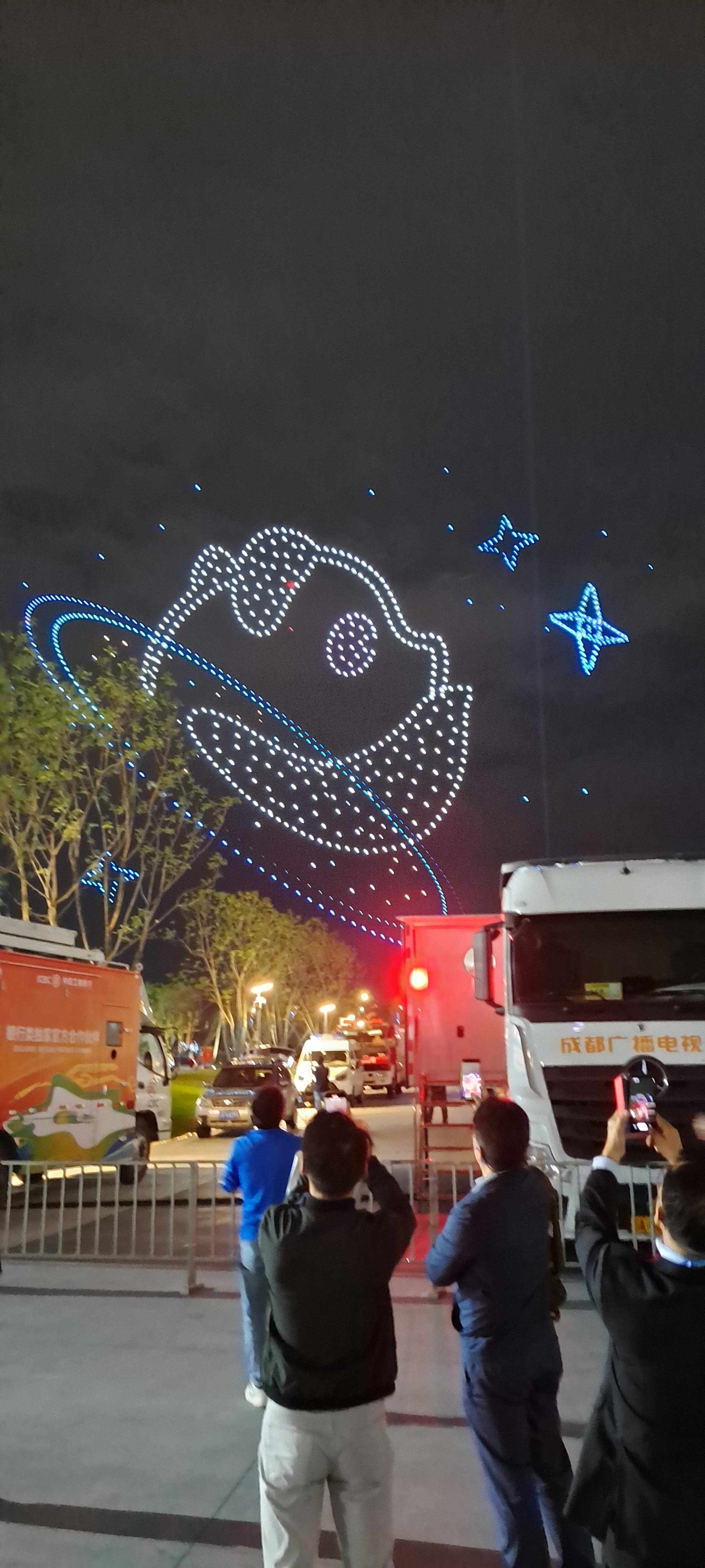
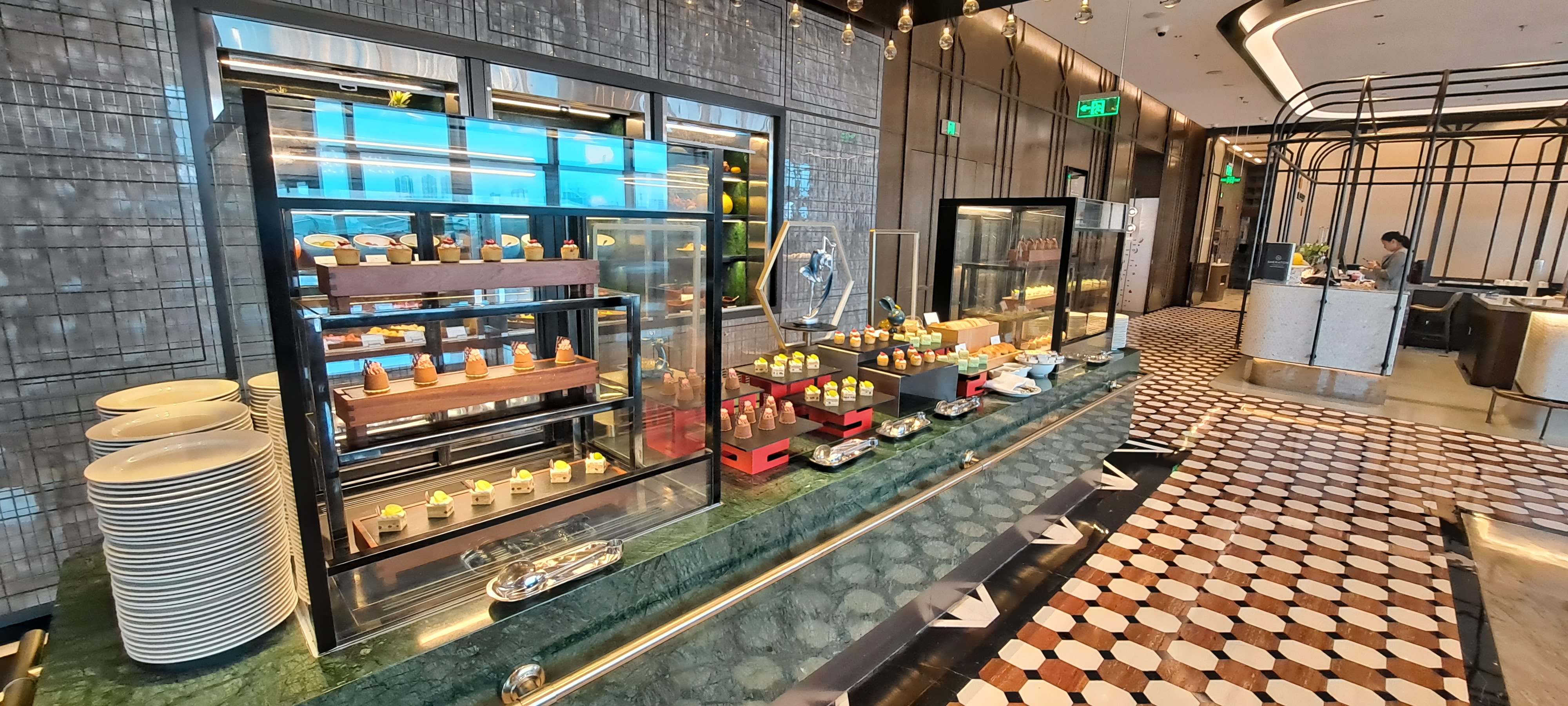
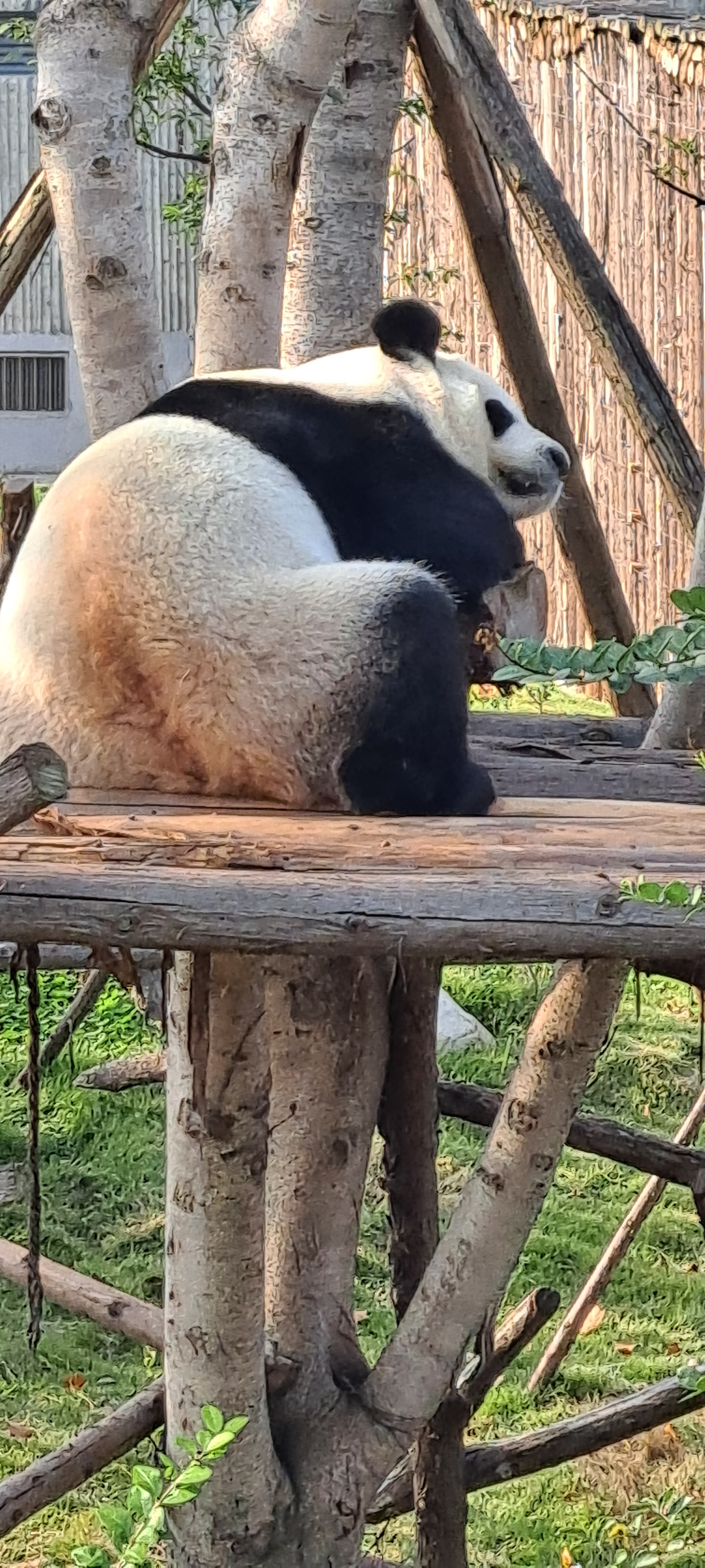


*
But that’s not all.
As a writer, it’s a struggle to even get noticed. At times it feels like you’re shouting into a void. An indifferent, uncaring void. In China, it’s the opposite.
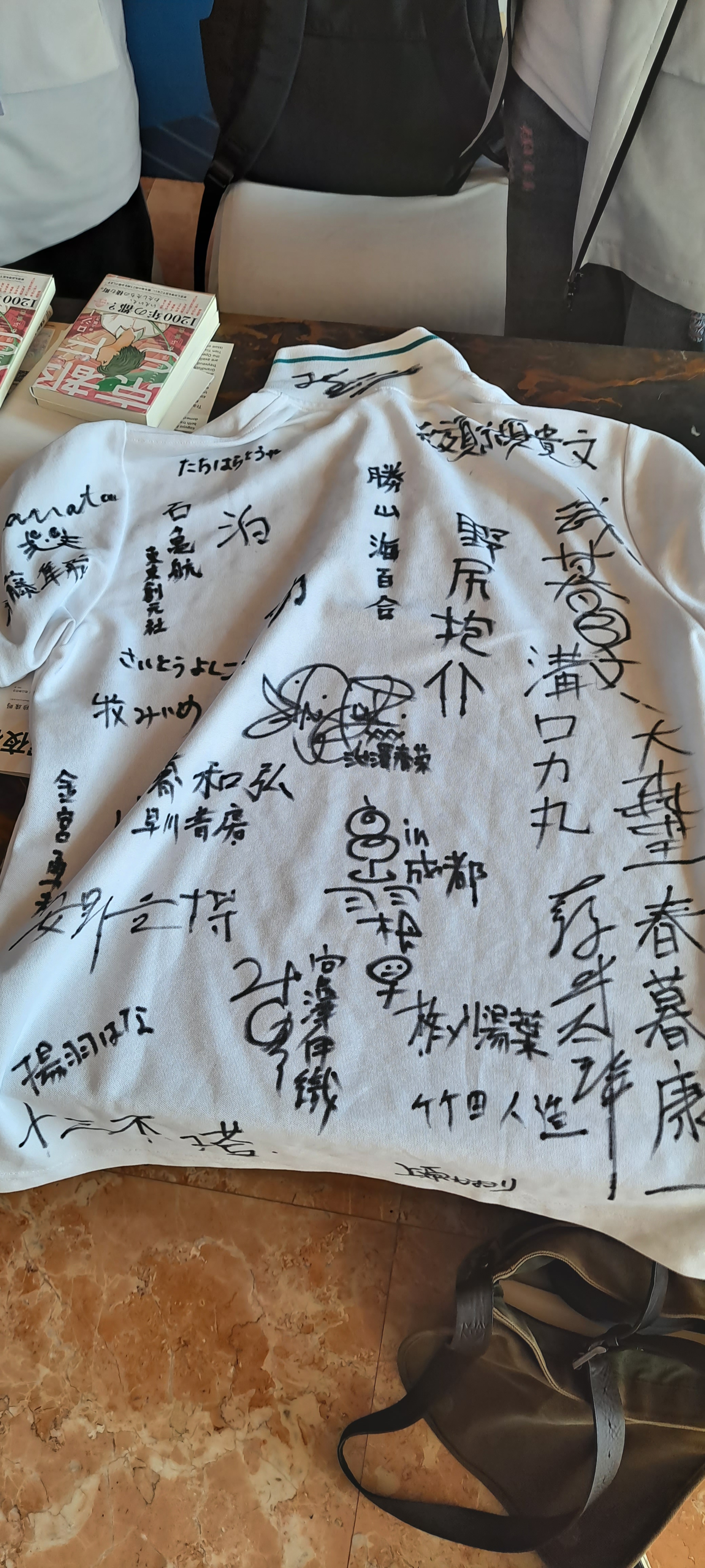
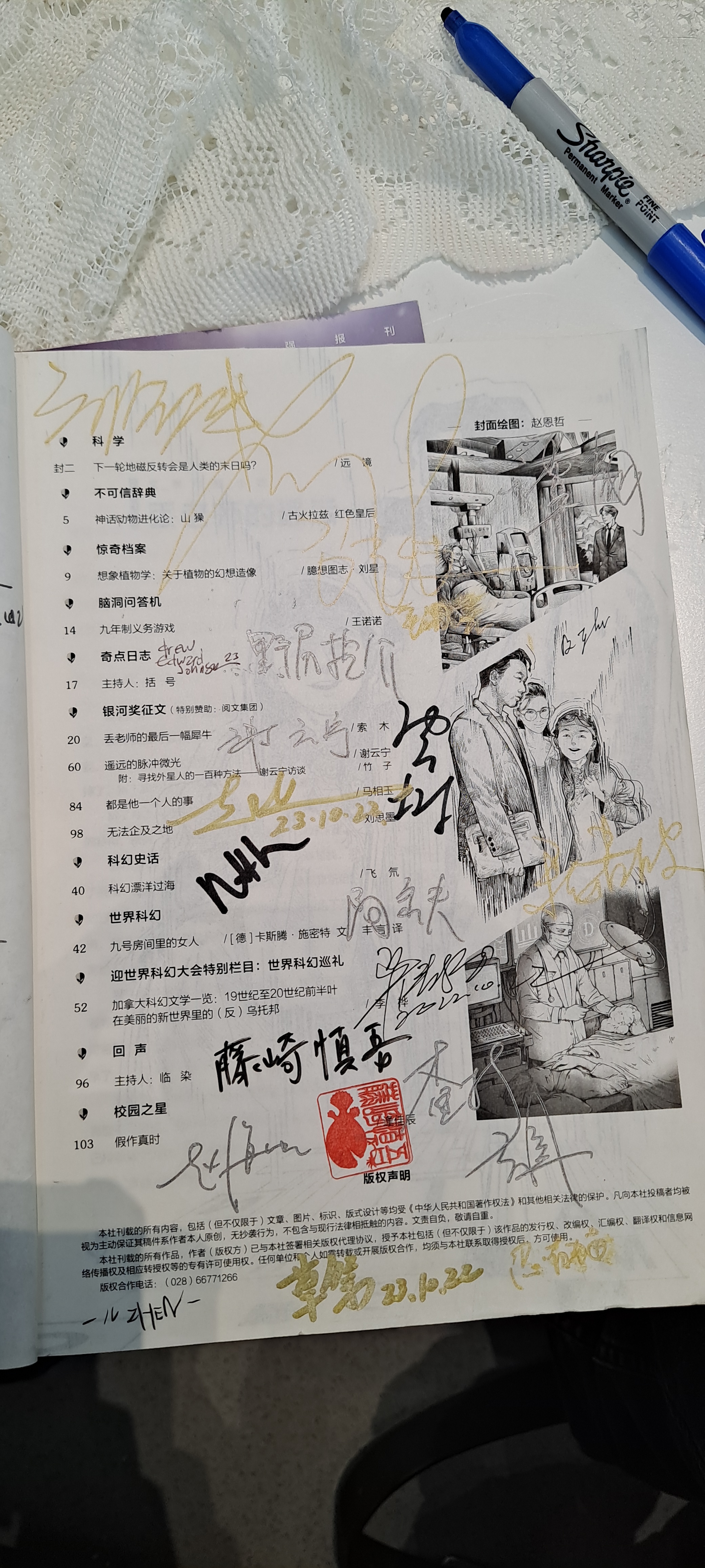
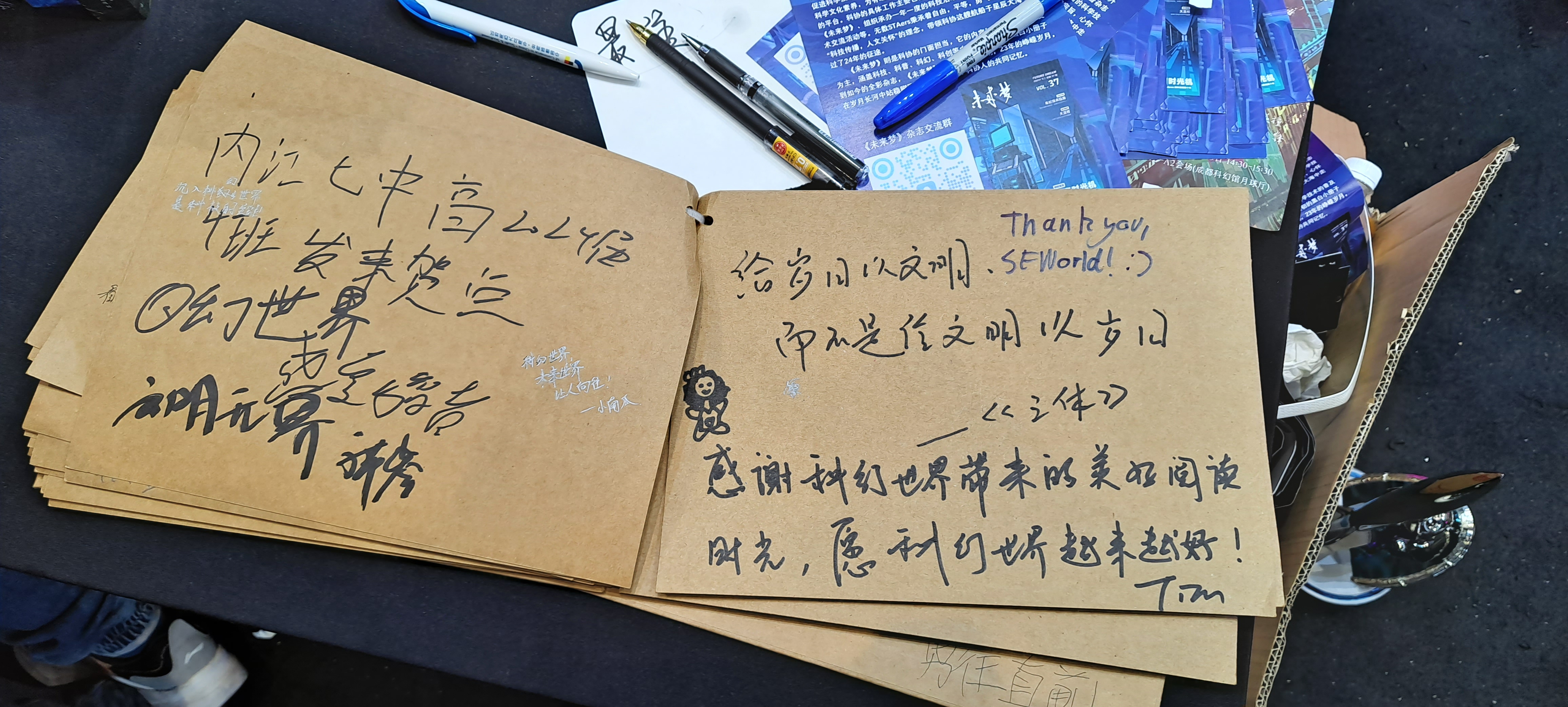
On numerous occasions, I am asked to sign something for someone. A magazine, a notebook, a copy of the Three Body Problem or a Cyberpunk 2077 comic (yes, really). I sign it. More fans come along. Some even recognize my name and get me to sign an issue of SF-World where one of my stories is published. Delighted by this, I sign that too.
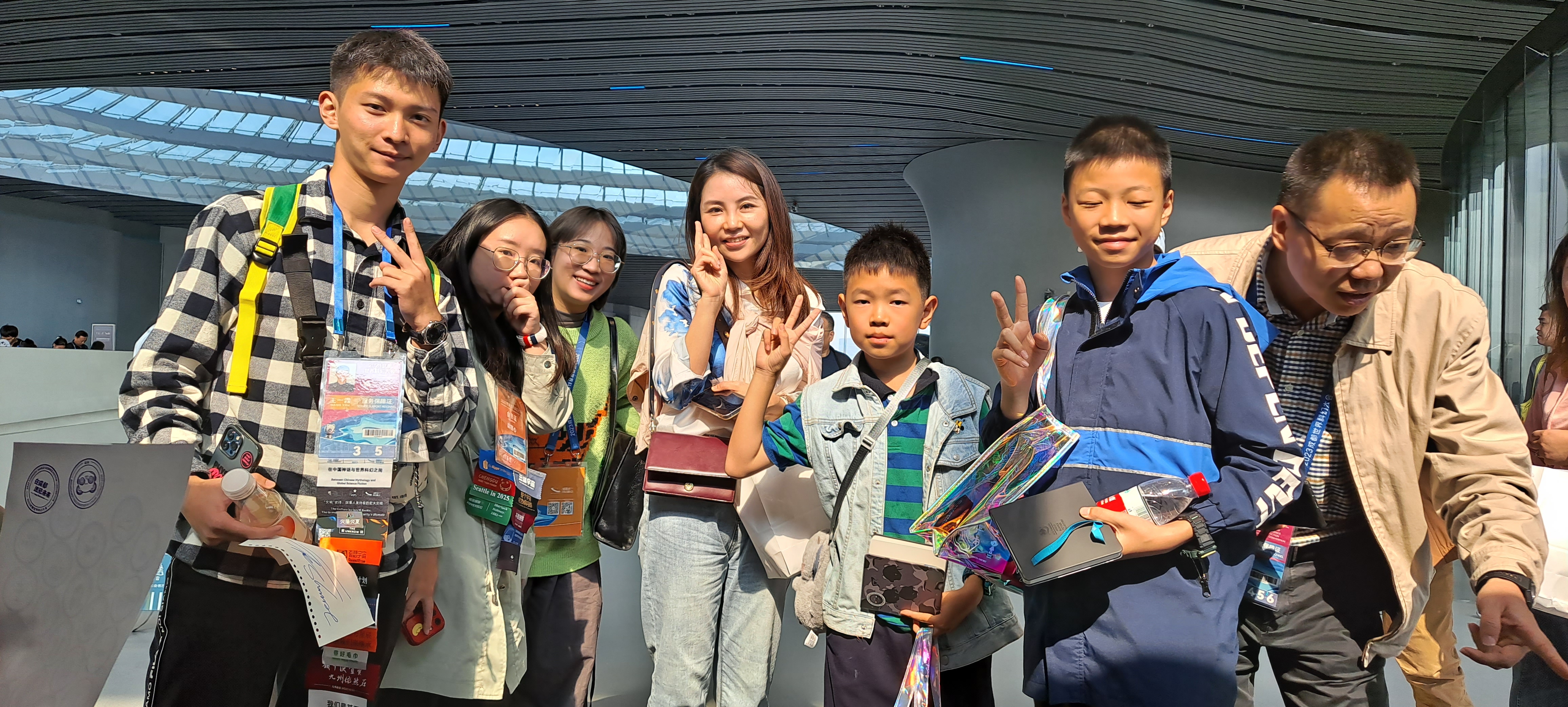
Between one blink and the next, I’m being swarmed. Fans are coming at me from all angles, books thrust out, desperate for me to sign it. Most of them ask to get their picture taken with me. Some even ask for me to sign my signature for their friends. I do, because the look of joy on their faces is so precious. They’re so excited, so overcome with emotion, to have met a real life sci-fi writer, that they’re practically glowing. They’re desperate to talk to me. About my work. About the genre. About anything. They’re practically shoving other people out of the way to get to me. They’re weary desert travelers, and I’m the fountain from which crystal clear water gushes out.
It’s a very surreal, very nice feeling.
More signings. Someone gets me to sign his t-shirt. Then someone else does. A young boy wants me to sign his copy of the Three Body Problem, which has already been signed by Cixin Liu. A mother pushes her young boy towards me, she’s so desperate for him to get a photo with me. It’s starting to be overwhelming. But when will I get this experience again? These people came to see me. I want to make their day. I want them to remember this moment fondly. I’m lucky compared to Cixin, who can barely even step foot outside the elevator before getting pounced.
An hour or two later, I tell my handler I’ve had enough. She bellows for everyone to clear the way. She and two others escort me back to the Green Room. As they do, a young man runs up with his book, having missed my signing. I say that this’ll be the last one. And I sign his book as “Last one”. He’s grinning from ear to ear.
At the end of the day, I must have signed five-hundred, perhaps six-hundred pages. Maybe more. Probably more. I’m tired. My wrist aches. My jaw is numb. But I’ve got to get back to my hotel room and be up in seven hours to do it all again. But I regret nothing. Because, for a moment, I got to make some people happy.
*
It’s the night of the Hugos ceremony. Usually, this would not bother me much. But tonight, I’m accepting for Adrian Tchaikovsky. He’s up for Best Series and Best Novella. Should he win, it’ll be me who has to go up on stage in front of god-knows-how-many thousands of people, accept the trophy for him, and not try and screw it up.
No pressure.
There are some great wins at the Hugo awards. Some as predicted, some not. I have too many horses in this race to pass judgements, at least publicly. But I will say that I am delighted to see a Polish comic writer pick up the award for Cyberpunk in the Best Graphic novel category. I’m also happy to see The Expanse and Everything Everywhere All At Once nab awards (although Andor would have also been a fantastic pick). It’s marvellous to hear the Chinese audience reacting to their favourite titles on screen. With a record number of attendees, and a record number of non-English attendees, it feels like we’re having a little more World in Worldcon tonight.
Then comes Adrian’s category. My heart’s in my throat as the books unfurl across the screen. My legs are numb. And then comes the moment of truth.
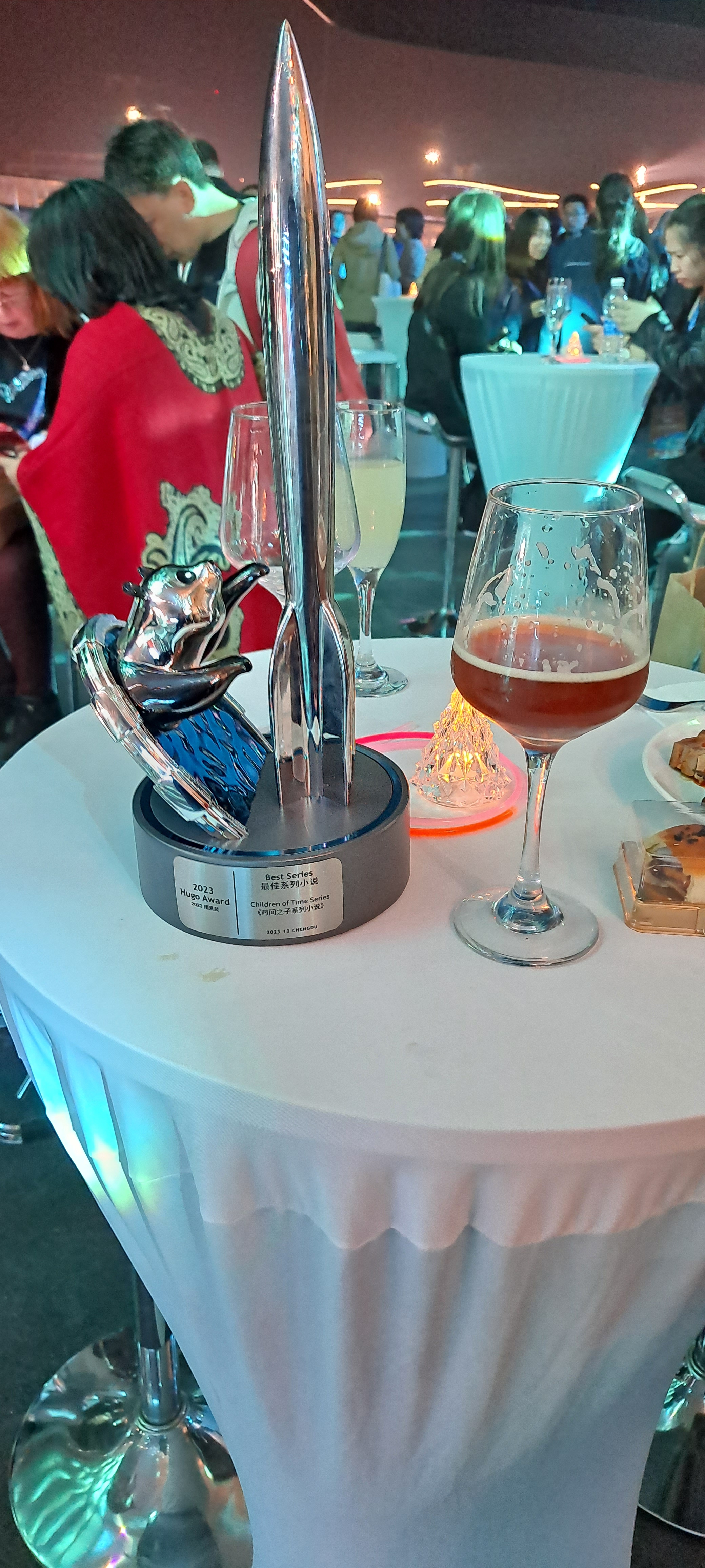
He wins for the Best Series. Everything’s a blur as I walk down the aisle and up the steps to accept the award for Adrian. Is this happening? This can’t be happening. It’s all so surreal. I take the award in my hands, shake the presenter’s hand, pose for the photos. I look out at the audience, but the lights are blinding. Before I read out Adrian’s speech, I tell a little joke about Adrian owing me a beer, because I bet that he’d win. The audience ripples with laughter.
Feeling microscopically more confident, I read Adrian’s speech. I’m surprisingly steady. The worst has passed. Then it’s over and I sit back down.
The rest of the night passes in a blur. There’s photos. Lots of photos. Then I’m dragged away to the Hugos After Party. It’s fabulous. I’ll let the photos speak for themselves.


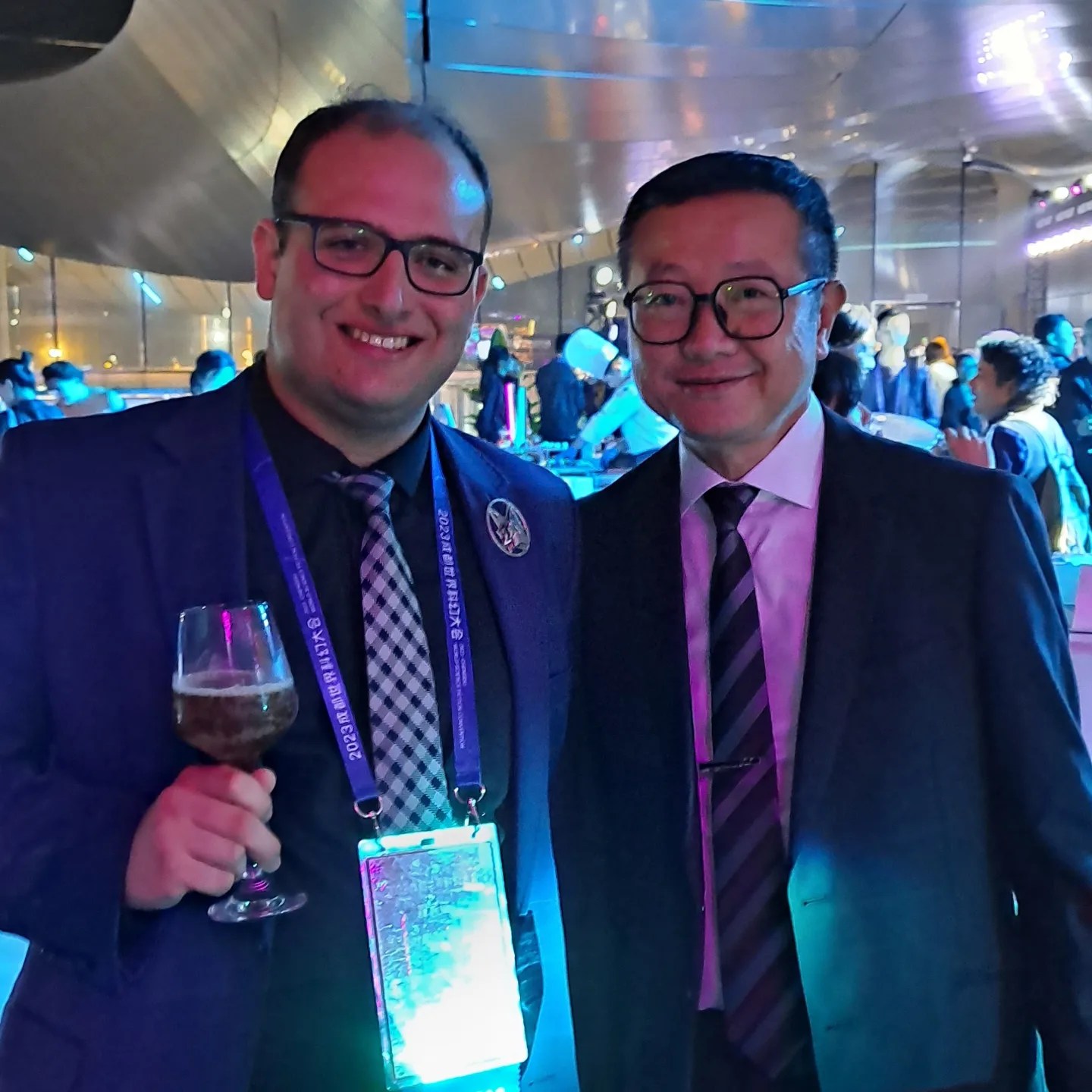

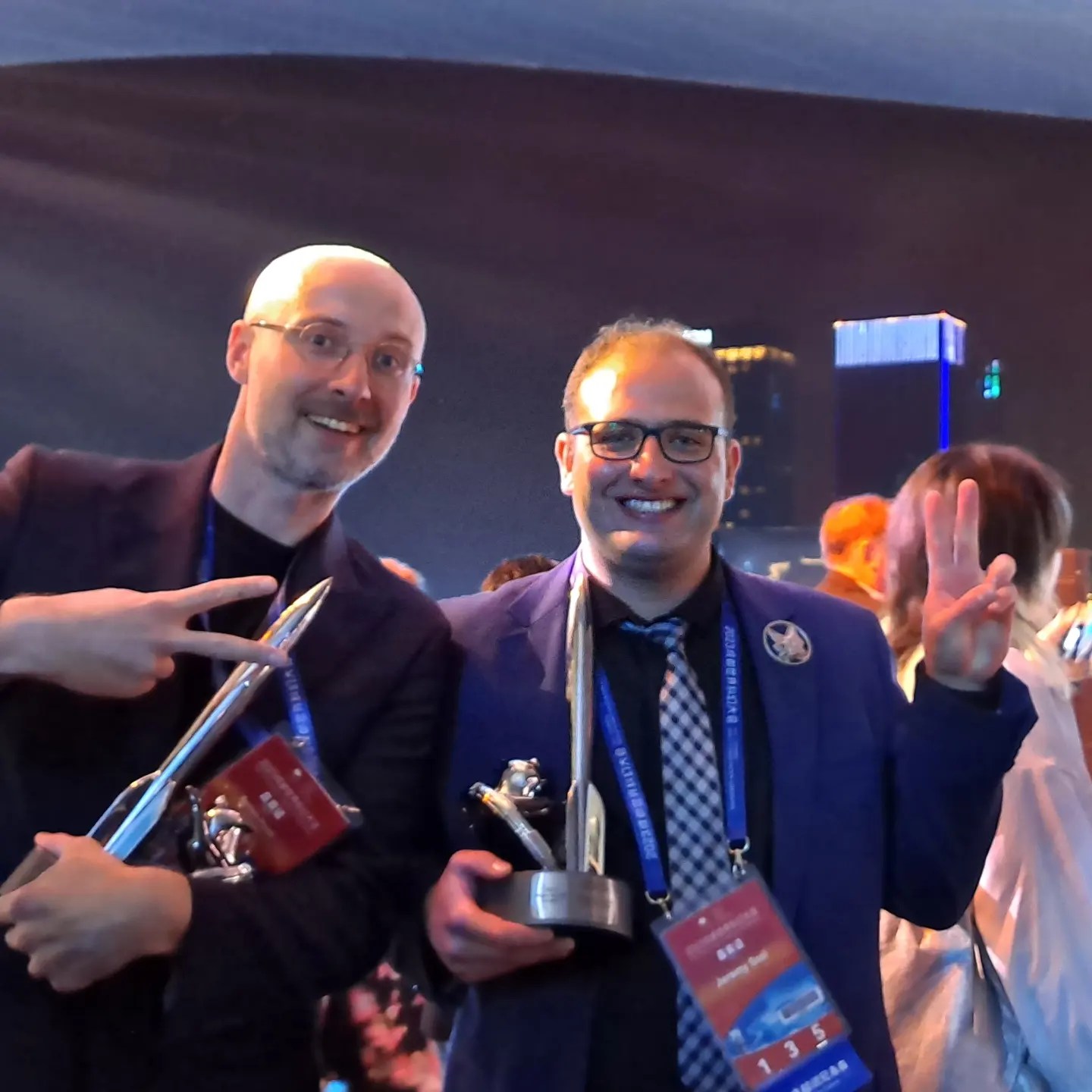
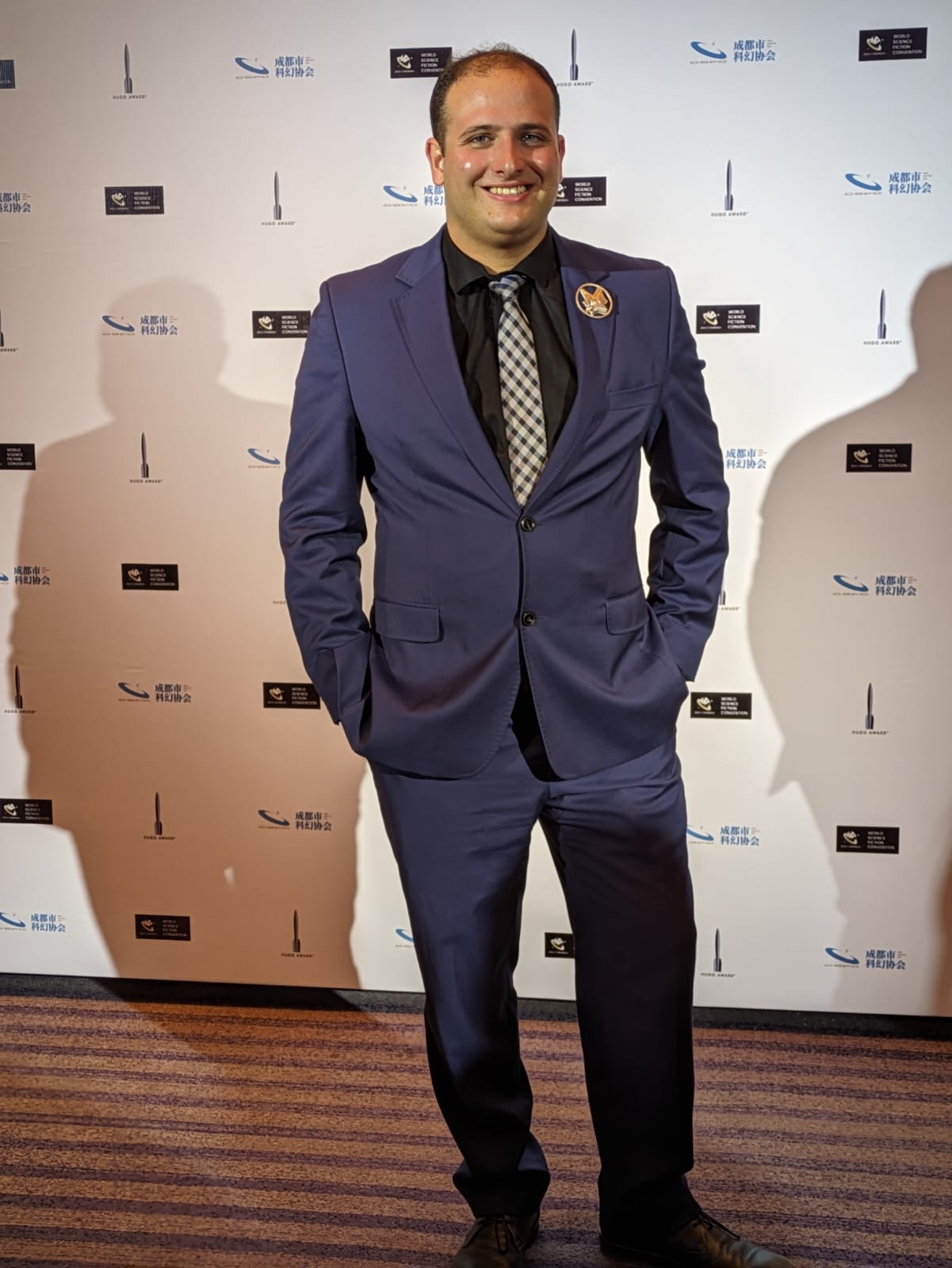

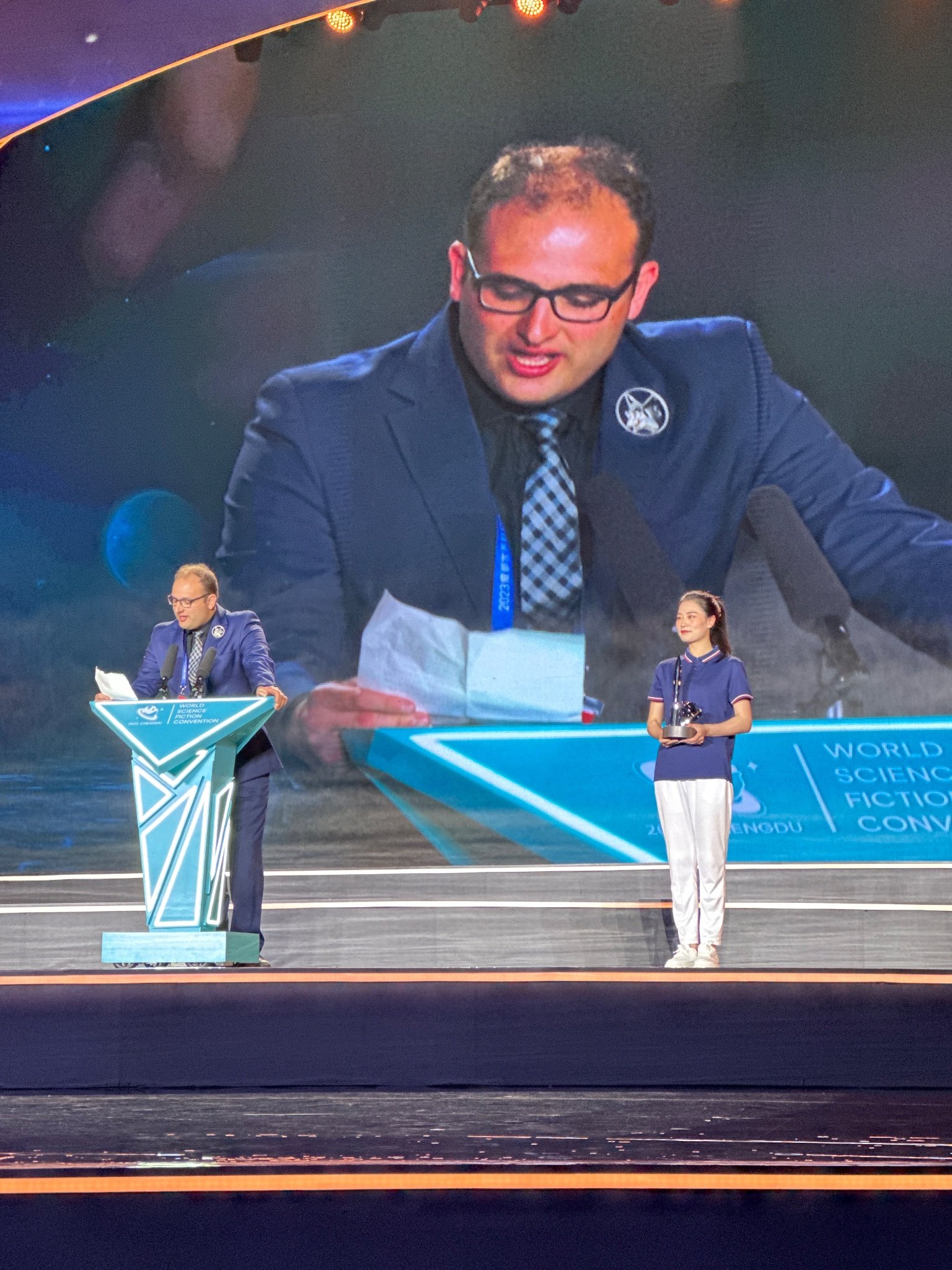
It was a fantastic night, and I loved every moment of it. But, of course, all credit and accolades here should go to Adrian for his fantastic Children of Time series, and you should all go read them if you have not already.
*
China has hosted the greatest WorldCon of all time. This did not feel like a fan-run con. This was a maniac, primal mix of the BAFTAs, Comic-con lite, and WorldCon, all rolled into one, shot through with a unique flavour that makes it stand tall and proud on its own.
By securing funding that allowed them to invite and cover the expenses of so many guests, Chengdu has shown us what WorldCon is capable of. How far we could reach, how incredible we could make our genre. It is no exaggeration when I say that WorldCon China has set the bar for what Worldcons can and should be. They have kicked down the door and ushered in an international, diverse fandom, the likes of which I’ve never seen before. It’s my sincere belief that future cons will need to take some serious, serious notes on how to run a convention.
Was it all perfect? No. Communication, while inevitable, given the language barrier, made things tricky at times. And the fact that the convention organisers at SF-World were not allowed to attend the Hugo ceremony or the Hugo after party is an absolute disgrace, and I’m furious on their behalf that this happened. But these are small blemishes on what proved to be a fantastic, phenomenal convention.
I’d like to thank the entire team at Science-Fiction World, including Sara Chen, Lily, Yunxin, Xiangxi Kong, Jane, and Myra, for carrying mountains on their shoulders. Also in the view for thanks are Since, my handler, and her friends Yuhao and Yucheng, along with all the drivers, handlers, managers and staff members I came into contact with. Thank you. Thank you for everything.
There may not be another convention like the 81st Worldcon held in Chengdu, China. Perhaps we’ll see more cons like it, in and out of China. Perhaps not. But I know that I’m going to look back in three, five, ten years time with fondness. I was there, I’m going to think. I was a small part of that incredible convention. I did WorldCon Chengdu.



 it” people.
 JEREMY SZAL